


Ask most people where their stop tap is and you’ll get a shrug. It’s worth knowing before you need it. In most homes the stop tap is under the kitchen sink, though in older South Wales terraces it can be under the stairs, in a downstairs loo or near the front door. Find it now, check it turns, and a burst pipe becomes a mop-up job rather than a ceiling coming down. If it’s stuck or missing, our plumbing team can sort it before the cold weather arrives.
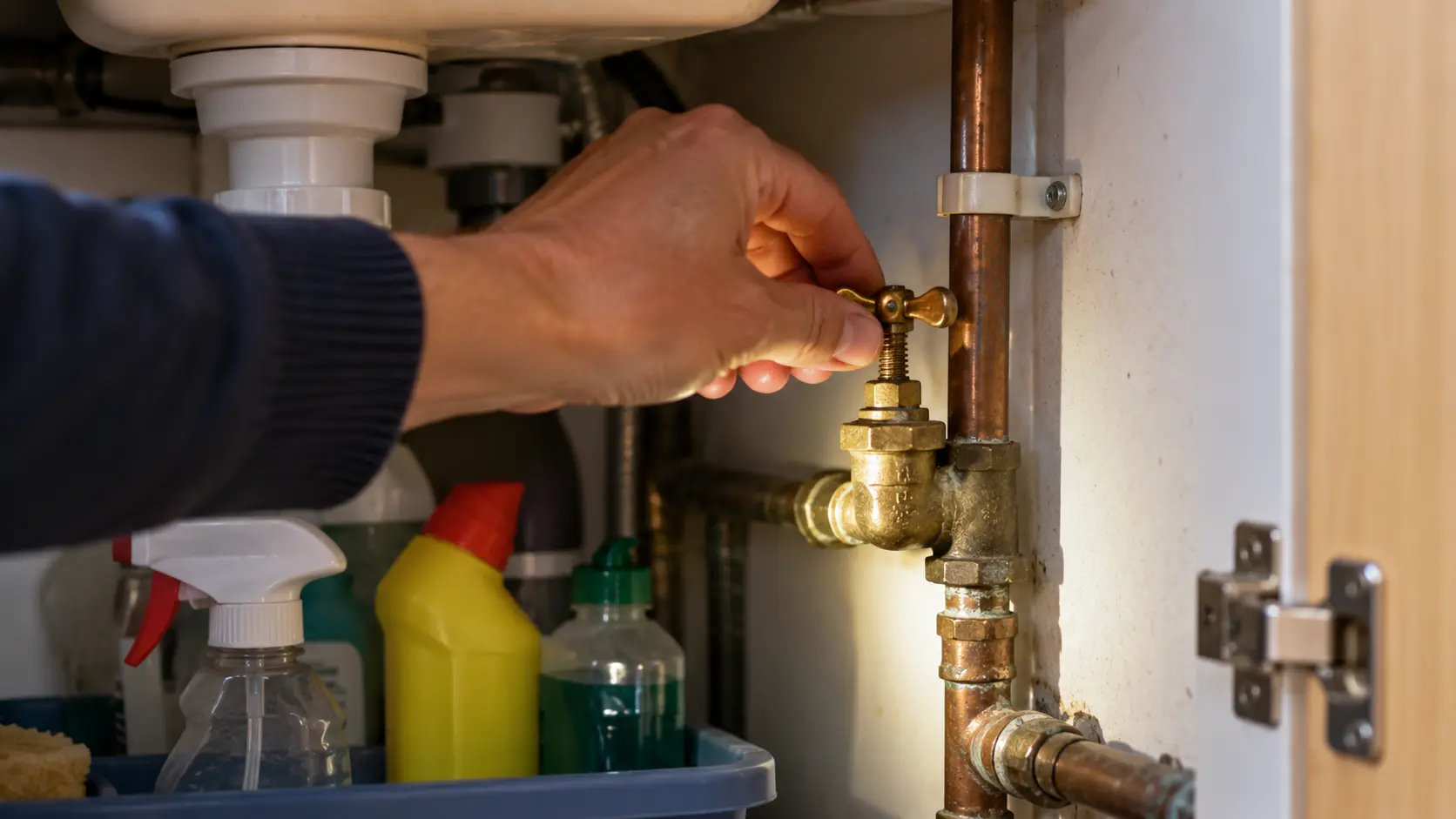
What does a stop tap do?
Your internal stop tap, also called a stopcock, controls the mains cold water coming into your home. Turn it off and you stop fresh water flowing into your pipes.
That’s the first thing to do if a pipe bursts, a tap won’t stop running or water is leaking through a ceiling.
Where is my stop tap likely to be?
Start by looking where the mains water pipe comes into the house. Common spots include:
- Under the kitchen sink, often at the back of the cupboard
- Under the stairs or in a hallway cupboard
- In a downstairs toilet or utility room
- Near the front door, sometimes under a floorboard
- In a cellar, which is common in older terraces across the Valleys
In flats, the stop tap may be inside the flat, in a shared cupboard or even in another part of the building. It’s worth finding out from the landlord or management company.
There’s usually another valve outside, under a small cover near your boundary or in the pavement. That one belongs to the water company, and for most of South Wales that’s Dŵr Cymru Welsh Water. It’s best not to operate it yourself.
How to check your stop tap works
Checking your stop tap takes a couple of minutes:
- Turn it clockwise to close it. Don’t force it.
- Turn on the cold kitchen tap. The flow should slow and stop.
- Turn the stop tap back anticlockwise until it’s fully open. Many plumbers suggest easing it back a quarter turn, so it doesn’t seize in the fully open position.
- Check the kitchen tap runs normally again.
Doing this once or twice a year, especially in autumn, keeps it moving and means you’re not finding out it’s stuck in the middle of a leak.
What if the stop tap is stuck or won’t turn off?
Old stop taps often seize up, especially if they haven’t been touched in years. If it won’t budge, or it turns but the water keeps running, stop there. Forcing it can snap the spindle or cause a leak at the valve itself.
A stuck or faulty stop tap is a quick fix for a plumber, and replacing it now is far better than discovering the problem mid-emergency. Our work carries a 1 year parts and labour warranty.
Why this matters before winter in South Wales
Most burst pipes happen when temperatures drop below freezing and then thaw. Pipes in lofts, garages, outside walls and under-floor voids are the most at risk, and many older properties here have pipework in exactly those places.
If a pipe does burst, knowing where your stop tap is buys you precious time. Our guide on what to do if you have a burst pipe walks you through the next steps. Our plumbers also cover Chepstow and the wider Monmouthshire area.
Frequently asked questions
Will turning off the stop tap stop all the water in my house?
It stops mains water coming in, but water already stored in the system can keep flowing. If you have a cold water tank in the loft, taps and pipes fed from it will keep running until it empties. Turning on your cold taps helps drain them faster. Your hot water cylinder, if you have one, holds water too.
Can I replace a stop tap myself?
It’s best left to a plumber. Replacing a stop tap means working on the mains supply, and a poor joint can leak badly. If your stop tap is seized, dripping or hard to reach, a plumber can fit a new one and make sure it’s accessible for the future.
Should I label my stop tap?
Yes, it’s a good idea. A simple tag telling everyone in the house what it is and which way turns it off can save a lot of panic. It’s especially handy if you have lodgers, family staying or a holiday let, or if you’re often away from home.
What should I do if I can’t find my stop tap?
Follow the mains pipe from where it enters the house, usually near the kitchen. Check cupboards, under floorboards and the cellar if you have one. If you still can’t find it, a plumber can locate it, and fit a new, easy-to-reach stop tap if needed.
Get your stop tap checked before the cold sets in
Give us a call on 01633 865 903 or drop us a message and we’ll find your stop tap, make sure it works and replace it if it’s past its best, so you’re ready for winter.


