


A wet room or level access shower both give you a step-free way in, so the right choice comes down to space, who’s using it and how much building work you want. For most South Wales homes, a level access shower from our accessible bathrooms team suits people who need a safer, simpler shower. A wet room suits wheelchair users or anyone who needs space to turn and room for a carer.
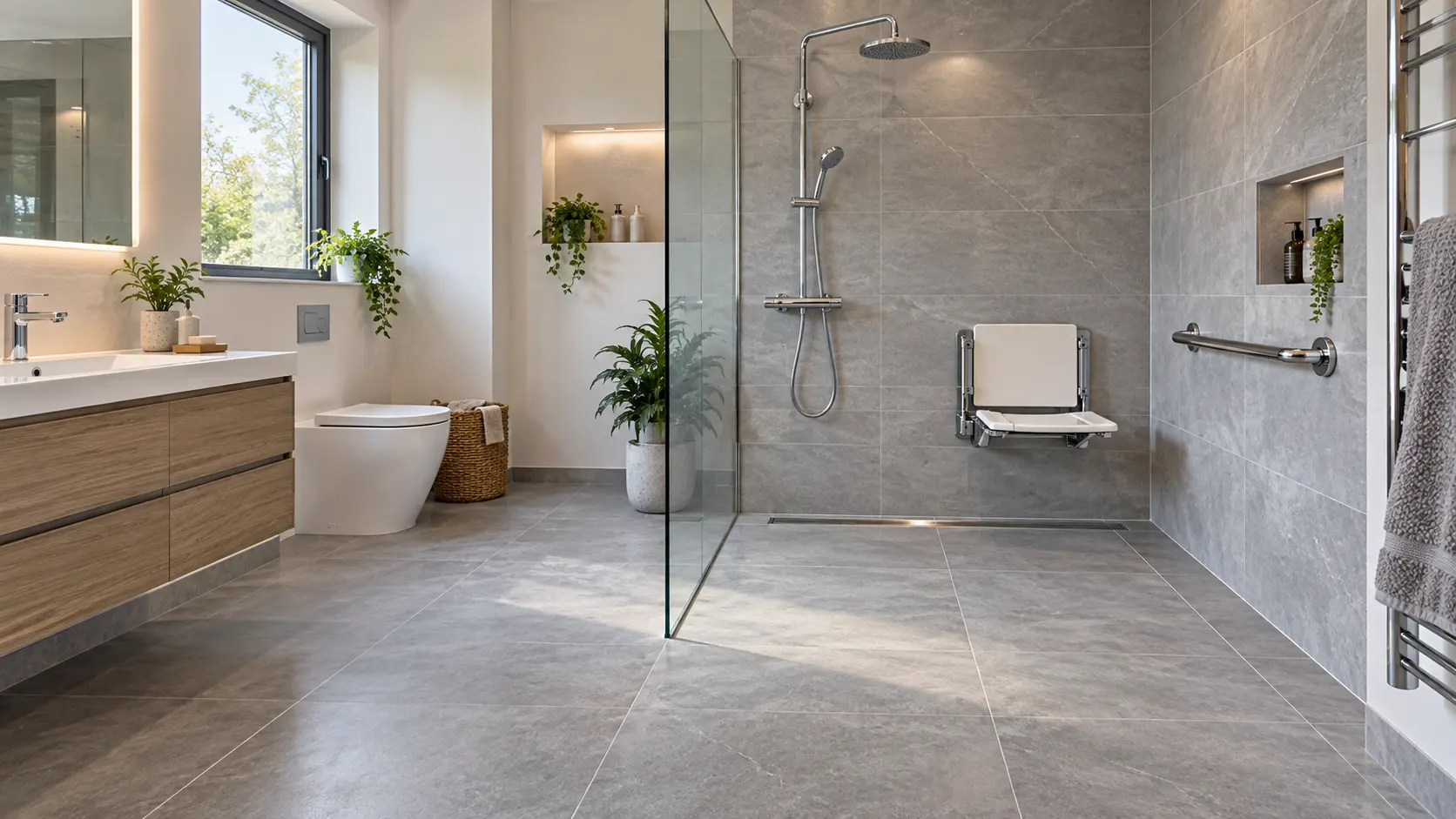
What’s the difference between a wet room and a level access shower?
A level access shower sits flush with the bathroom floor. It uses a very low-profile tray, or a former set into the floor, with a glass screen to keep the water in the shower area.
A wet room goes further. The whole room is waterproofed, the floor is laid to a gentle slope towards a drain, and there’s often no screen at all, or just a short one. The shower becomes part of the room rather than something you step into.
If you want the basics first, our guide on what a level access shower is covers it in more detail.
When a level access shower makes more sense
A level access shower is usually the simpler job. It’s a good fit if:
- The person using it can walk, even if they’re unsteady or use a stick
- You want to keep the rest of the bathroom dry, with towels and the loo roll out of the splash zone
- The bathroom is a standard size and you’d rather not rip the whole room out
- You’re planning ahead, making the bathroom easier for later life without a full rebuild
Add a fold-down seat, a grab rail and a thermostatic shower, and it covers what most people need.
When a wet room is the better choice
A wet room comes into its own when space and access matter most. It’s usually the better option if:
- Someone uses a wheelchair or shower chair and needs to roll straight in
- A carer needs room to help with washing
- The bathroom is small and a screen would get in the way
- You want the most open, flexible layout possible
The trade-off is that more of the room gets wet. The floor, walls and fittings all need to cope with that, which is why the waterproofing has to be done properly.
What’s involved in fitting each one
Both jobs need the floor to fall towards the drain so water doesn’t sit or run the wrong way. On a solid ground floor that can mean cutting into the concrete. On an upstairs timber floor, the joists and the depth under the floorboards decide what’s possible.
A wet room adds full tanking, which means waterproofing the floor and the lower walls before tiling. Get that wrong and you’ll find out through the ceiling below. It’s not a job for guesswork.
Our team handles wet rooms and level access showers as full projects, including accessibility aids and underfloor heating in wet rooms, which helps the floor dry faster after a shower.
Accessible bathrooms in South Wales homes
Plenty of homes around Newport, Cwmbran and the Valleys are older terraces with small bathrooms, often upstairs and sometimes tucked into the back of the house. In a tight space like that, a wet room can make better use of every inch than a shower tray and screen.
Bungalows and newer homes in places like Chepstow and Monmouth often have more floor space to play with, so either option can work. The right answer depends on who’s using the room now and who might be using it in five or ten years’ time.
There’s more on why an accessible bathroom is worth doing if you’re still weighing things up.
Frequently asked questions
Can you fit a wet room upstairs?
Usually, yes. Upstairs wet rooms are common, but the floor needs checking first. The joists have to take the weight and allow for the fall to the drain, and the waste pipe needs a clear route out. A proper survey will tell you what’s possible in your room.
Is a wet room harder to keep clean?
Not really. With no tray edges or seals around a shower base, there are fewer places for grime to build up. The main thing is choosing tiles and grout that are easy to wipe down, and keeping the drain clear of hair so water runs away quickly.
Will a level access shower work for a wheelchair user?
It can, if the shower area is big enough to turn in and the screen doesn’t get in the way. For many wheelchair users, though, a wet room gives more room to manoeuvre and makes life easier for a carer. It’s worth talking through daily routines before deciding.
How long does the work take?
It depends on the room and how much needs changing, including the floor, pipework and tiling. A level access shower is usually quicker than a full wet room. You’ll get a clearer idea of timings once someone has seen the bathroom.
Choosing the right shower for your home
If you’re stuck between a wet room or level access shower, start with who’ll be using it and how. Then get the room looked at properly. Give us a ring on 01633 865903 or send us a message and we’ll come out, have a look and talk it through with you.


