


If you’re thinking about air con, one of the first questions is where the units will actually go. The short answer is that the indoor unit usually works best high on an outside wall, away from direct sun and heat, with the outdoor unit close by in a spot with plenty of fresh air. Get the position right and your system runs quieter, cheaper and lasts longer. It’s one of the first things to sort out when planning an air conditioning installation in South Wales, so here’s what to look at.
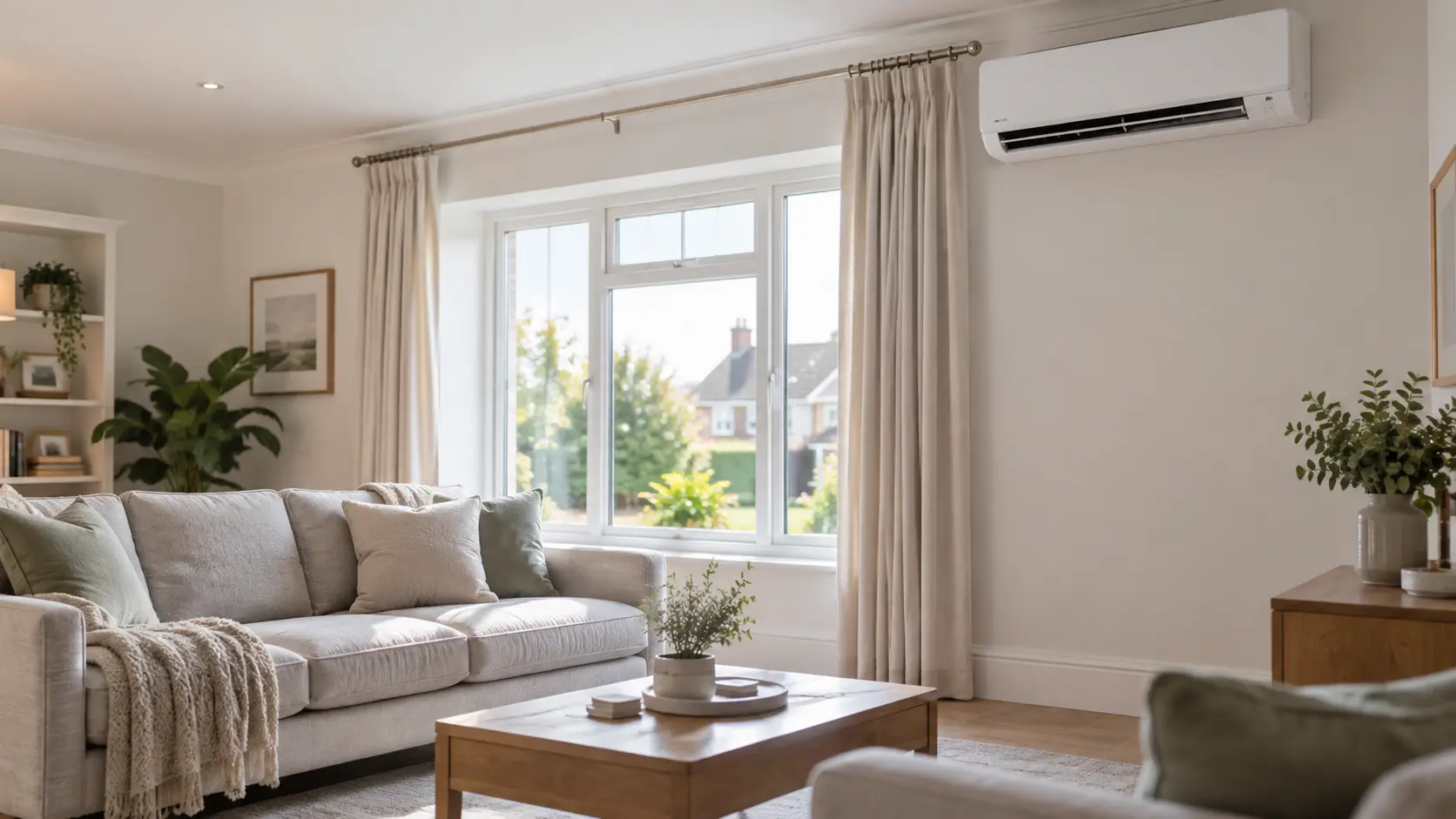
Where should the indoor air conditioning unit go?
A wall-mounted indoor unit needs to push air across the whole room. That’s why it normally sits high up, around 15 to 30cm below the ceiling, where air can spread out evenly.
A few things make a big difference:
- An outside wall. This keeps the pipe run to the outdoor unit short and neat.
- Away from heat sources. Direct sunlight, radiators, TVs and ovens can confuse the unit’s sensor, so it works harder than it needs to.
- Not blowing straight at you. Nobody wants a draught on the back of their neck. Avoid putting the unit directly above a bed, sofa or desk.
- Clear space around it. Curtains, shelves or tall furniture right below the unit block the airflow.
There also needs to be a route for the condensate pipe, which carries away water the unit removes from the air. Usually this runs outside by gravity. If that’s not possible, a small pump can be fitted.
Where should the outdoor unit go?
The outdoor unit is the part people worry about most, usually because of noise or looks.
The ideal spot has:
- Good airflow on all sides, with the clearances the manufacturer specifies
- A solid base, either wall brackets or a ground stand
- Easy access for servicing and cleaning
- Some distance from bedroom windows, both yours and your neighbours’
Try not to box it into a tight corner or enclosed space. It needs to breathe. Hot air it can’t get rid of just gets pulled back in, and efficiency drops.
Placing air conditioning in South Wales homes
Across South Wales, housing ranges from Victorian terraces with narrow back gardens to modern estates and converted farmhouses. Each throws up its own challenges.
In a terrace, the rear wall or back yard is usually the best bet for the outdoor unit, keeping it off the street and away from the front of the house. On newer builds, check whether there are any restrictions in the property deeds. For a bungalow or detached house, you normally have more choice, so it’s about balancing a short pipe run with keeping noise away from bedrooms.
Plenty of homes here also have extensions, loft conversions or garden rooms that get hot in summer and chilly in winter. These are often the best rooms for air con, and our guide to the best air conditioning systems explains which types suit which spaces.
Do you need planning permission for air conditioning?
Many home installs don’t need a full planning application, but it isn’t guaranteed. Listed buildings, conservation areas, flats and homes close to a boundary can all be treated differently. Rules in Wales can also differ from England. If you’re unsure, check with your local council’s planning team before work starts.
Why it pays to get the position right first time
Once the units are fixed, moving them isn’t a small job. A poor position can mean higher running costs, more noise and awkward servicing for years.
Fitting a split system also involves handling refrigerant, which by law needs an F-Gas certified engineer. That’s not something to leave to a handyman. A proper survey looks at the room, the walls, the electrics and where the outdoor unit can safely go before anything is drilled. If you’re in the Newport area, our air conditioning service in Newport covers the city and nearby communities.
Frequently asked questions
Can an air conditioning unit go on an internal wall?
It can, but it usually means a longer pipe run through the house to reach the outdoor unit. That adds cost, needs somewhere to hide the pipework and may affect efficiency. An outside wall is nearly always the simpler option. Your installer can tell you what’s possible in your room during the survey.
How far can the outdoor unit be from the indoor unit?
It depends on the model. Each manufacturer sets maximum and minimum pipe lengths, and longer runs may need extra refrigerant. In most homes the two units sit fairly close together, often back to back on the same wall. The installer will check the limits for the system you choose.
Will an outdoor air conditioning unit annoy my neighbours?
Modern units are designed to run quietly, but it’s still good manners to keep the outdoor unit away from a neighbour’s bedroom window or patio. Mounting it on anti-vibration brackets also helps. If you’re in a terrace or semi, it’s worth mentioning your plans to next door before the install.
Talk to us about the best spot for your air con
Give us a call on 01633 865 903 or drop us a message and we’ll come out, look at your rooms and walls, and suggest the best place for both units before we fit anything.


